
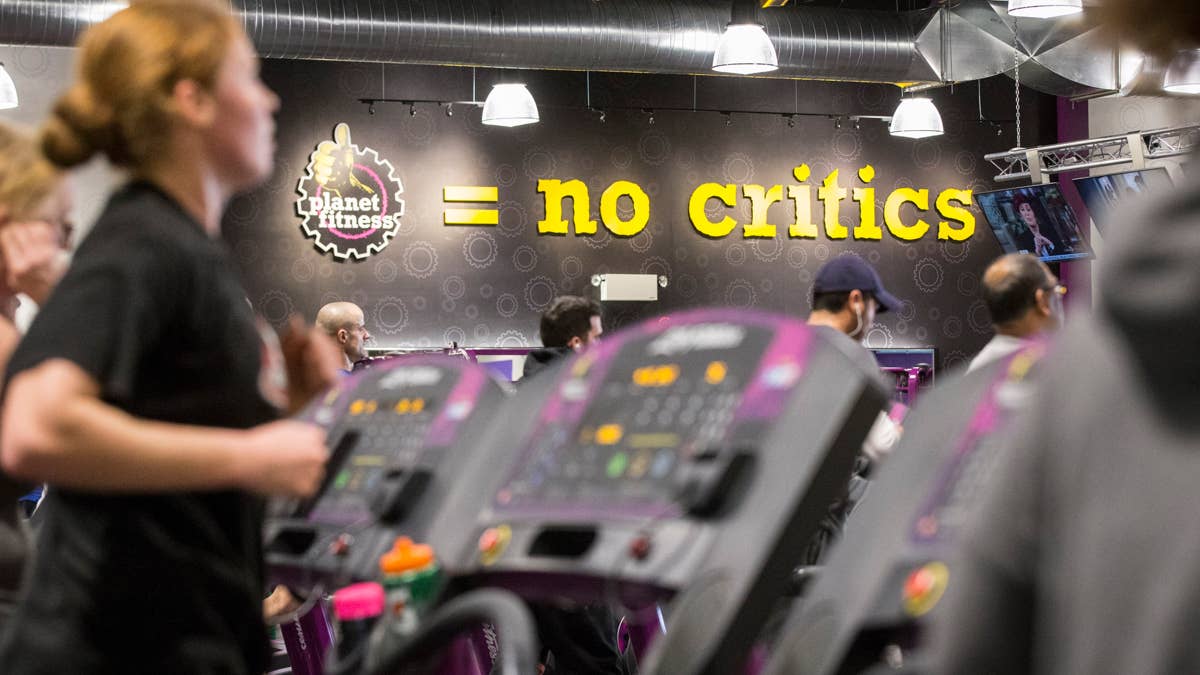
I always felt uncomfortable at the gym, even though I love working out. There’s that preconception that everyone there should look amazing, have a six-pack and know exactly what they are doing.
For years, Planet Fitness was trying to address this issue by offering and promoting a “Judgement Free Zone.” The chain has dominated the budget-friendly fitness industry, targeting the casual, first-time gym goer, and expanding to more than 2,900 locations nationwide.
That strategy helped fuel Planet Fitness’s growth, but recent results suggest the company is finding it harder to sustain membership momentum.
Recent reports suggest that the fitness giant is dealing with a few headwinds of its own, due to shifts in consumer behavior, and recent gym closures are only a small piece of the puzzle.
Planet Fitness faces “internal and external headwinds”
Signs of weaker-than-expected membership growth emerged in the company’s financial results earlier this year.
During the first-quarter earnings release in May 2026, management admitted they experienced a “slower-than-expected start from a net member growth perspective.”
Facing what the company described as “internal and external headwinds” during the critical New Year resolution sign-up period, Planet Fitness was forced into a sudden retreat. Management abruptly paused a planned price increase on its premium Black Card tier, stating they needed to conduct a “broader pricing review” to avoid scaring off increasingly price-sensitive shoppers.
Then, the second-quarter earnings reported in August painted a clearer picture. The fitness giant reported a positive 1.7% increase in system-wide same-club sales. However, Planet Fitness noted that 1.7% growth was driven entirely by rate increases (higher prices), not by volume increases.
The data suggest the gym chain is battling a stall in new memberships. Moreover, the management said it expects same-club sales growth to keep moderating.
“We anticipate quarterly same club sales growth to moderate sequentially as we move through the year,” CFO Sudhanshu Priyadarshi told investors on the August call, according to a transcript provided by The Motley Fool.
More recently, it was confirmed that the fitness chain will close five locations.
Planet Fitness to close five locations across different states
Planet Fitness is shutting a handful of locations across five U.S. states, according to a recent report by Inc. Magazine.
The confirmed closures for late 2026 include gyms in:
- New York (25 Broadway, New York, NY)
- Florida (2101 N University Drive, Coral Springs, FL)
- Indiana (1129 N Baldwin Avenue, Marion, IN)
- Vermont (530 Community Drive, South Burlington, VT)
- South Carolina (601 Belle Station Boulevard, Mount Pleasant, SC – temporarily closed)
While closing a few gyms in a system of thousands is typically a sign of a standard real estate churn, one franchise attorney suggests Planet Fitness closures also point to a broader macroeconomic problem.
“What the closures do show is that the easy growth phase is over, even for the industry leader. Planet Fitness has spent years capturing the casual, first-time gym-goer in most U.S. markets, and many of those people are already members or have already tried it and quit,” franchise attorney Beverly Bradshaw recently told Inc. Magazine.
Bradshaw notes that rising competition from newer budget gyms makes a slow start to the year difficult to overcome, especially since closing locations still leaves franchisees on the hook for 10- to 15-year lease liabilities.
Meanwhile, required equipment upgrades and other franchise-related costs are putting pressure on franchisee margins, particularly where membership growth is weak. Because of this, she argues that individual club profitability, not adding new locations, is the true indicator of the brand’s financial health.
Planet Fitness changes strategy and tests a national $10 Classic Card promotion
With membership growth coming in below expectations and consumers remaining sensitive to prices, Planet Fitness is testing a different approach to attracting new members. Rather than permanently reversing its previous price increases, the company plans to run a limited-time national promotion to measure demand and regional price sensitivity.
During the Q2 call, CEO Colleen Keating revealed that the brand would “test a national $10 Classic Card promotion later this quarter to evaluate regional price elasticity and demand indicators.”
Management noted on the Q2 call that Gen Z is now the fastest-growing proportion of their membership base, heavily driven by their “High School Summer Pass” program, which logged 12 million workouts this year alone.
Wall Street analysts question the possibility of a discount trap
During the earnings call, TD Cowen’s analyst Maksim Rakhlenko raised concerns that frequent rollbacks could create “shadow pricing,” a trap where bargain-hunting shoppers get used to sales and refuse to ever pay full price again.
Rakhlenko also asked the management how it will “maintain the $15 classic card members from not quitting and rejoining at $10.”
Management pushed back on concerns that the $10 promotion would cannibalize full-price memberships, emphasizing that it would be a limited-time national promotion rather than a permanent reduction in the Classic Card’s standard price.
Both CEO Colleen Keating and former Interim CFO Thomas Fitzgerald noted that previous localized testing and historical data from 2024 showed virtually zero existing members downgrading or “trading down” from the standard $15 tier to the $10 rate during promotional windows.
Consumers are not abandoning fitness, but they are changing where they spend the money
Survey data suggest that Americans continue to prioritize fitness spending, even as they reassess their household budgets.
According to the Health & Fitness Association (HFA), approximately 82 million Americans planned to spend a combined $60 billion on health, fitness, and exercise in 2026. When forced to cut costs, 44% of consumers said they would scale back dining out and 36% pointed to travel. Only 23% said they would trim their fitness spending.
“Americans are not just setting fitness goals; they are budgeting for them. This research shows that people increasingly see exercise as an essential investment in their long-term health,” said HFA President and CEO Liz Clark.
However, where that money goes is shifting. Growing interest in boutique fitness, recovery amenities, and specialized strength training is reshaping parts of the fitness industry.
“Boutique fitness is experiencing one of the strongest growth periods we’ve seen, with record openings from existing brands and new names,” according to the Health & Fitness Association’s industry trends analysis.
For a mass-market brand like Planet Fitness, that means surviving the next era requires more than just competing on price; it means providing consumers exactly what they need.